
When to Replace Your Gas Heater — 7 Signs It's Time
Gas ducted heaters are workhorses — especially in the Blue Mountains where they run for thousands of hours each winter. But they don't last forever. Here are seven signs your gas heater may need replacing.
1. It's Over 15–20 Years Old Most gas ducted heaters have a lifespan of 15–20 years with regular servicing. Beyond this age, components become increasingly unreliable, parts become harder to source, and safety risks increase. If your heater was installed before 2005, it's worth getting a professional assessment.
2. Cracked Heat Exchanger This is the most serious issue. A cracked heat exchanger can leak carbon monoxide — an odourless, invisible gas that can be fatal — into your living spaces. If your technician finds a cracked heat exchanger, the heater should be replaced immediately. Repair is not recommended as cracks tend to propagate.
3. Rising Gas Bills Without Explanation If your gas bills have increased significantly but your usage pattern hasn't changed, your heater is likely losing efficiency. Older heaters may only operate at 50–60% efficiency, while modern systems achieve 85–95%. Replacing an old heater can cut your gas bills by 30–40%.
4. Uneven Heating or Cold Spots If some rooms are warm while others stay cold — and your ductwork has been checked for leaks — the heater may no longer have the capacity to push warm air through the full duct system. This often indicates a failing fan motor or declining burner output.
5. Strange Noises Banging, rattling, or grinding noises from the heater unit are warning signs. These typically indicate worn bearings, loose components, or heat exchanger movement. While some noises can be repaired, persistent or worsening noises in an older unit usually mean replacement is more cost-effective than ongoing repairs.
6. Frequent Repairs If you've spent more than $500–$800 on repairs in the past two years, it's time to consider replacement. Ongoing repair costs add up quickly, and each repair is really just patching an aging system.
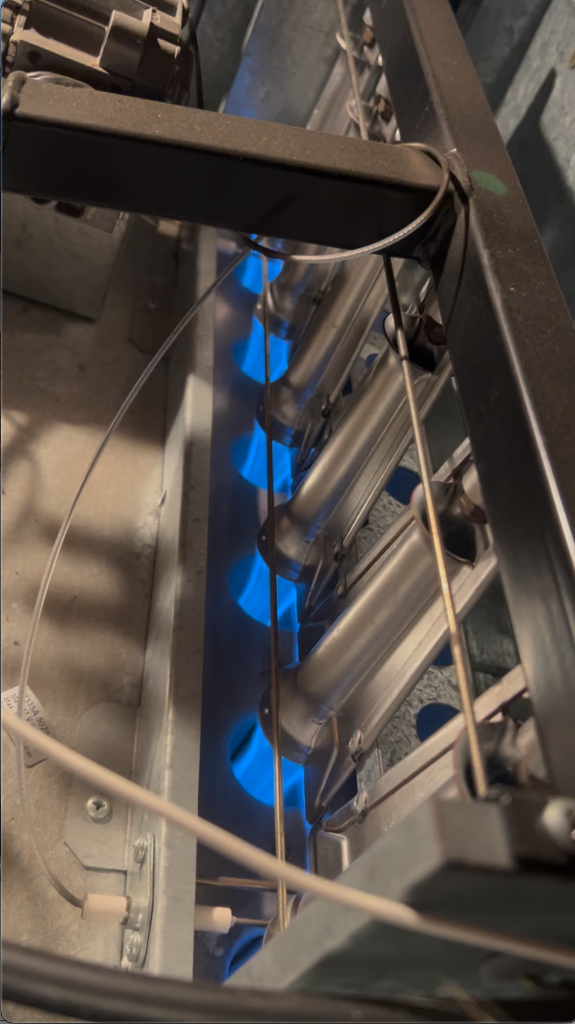
7. Yellow or Orange Burner Flame A healthy gas heater should produce a clean blue flame. A yellow, orange, or flickering flame indicates incomplete combustion — which produces carbon monoxide. This is both a safety hazard and an efficiency problem. Have it inspected immediately.
What Are Your Replacement Options?
New Gas Ducted Heater (Braemar) The most direct replacement. Modern Braemar ducted heaters achieve 5–6 star energy ratings, are significantly quieter, and can often be installed into your existing ductwork — keeping costs down. Betar Air are authorised Braemar technicians.
Typical cost: $3,500–$8,000 depending on capacity and ductwork condition.
Reverse-Cycle Ducted Air Conditioning If your existing ductwork is in good condition, a reverse-cycle ducted system can replace gas heating AND add cooling — giving you year-round climate control from one system. Better suited to homes with solar panels.
Typical cost: $8,000–$18,000 depending on home size.
Cold-Climate Split Systems For smaller homes, cold-climate reverse-cycle split systems can replace gas heating in specific rooms. Brands like Daikin and Mitsubishi Electric offer models rated to -15°C — suitable for Blue Mountains conditions.
Split system supply and installation starts from $2,000 per unit, depending on capacity and access.
What About My Existing Ductwork? In most cases, your existing ductwork can be reused with a new gas or reverse-cycle heater — significantly reducing installation cost. Betar Air inspects ductwork condition as part of every replacement quote.
If you're unsure whether your gas heater needs replacing, Betar Air provides honest, no-pressure assessments. Call 0438 944 224 or request a free quote online.